
Interior Design Trends in Dubai for 2026: What Clients Are Requesting
01
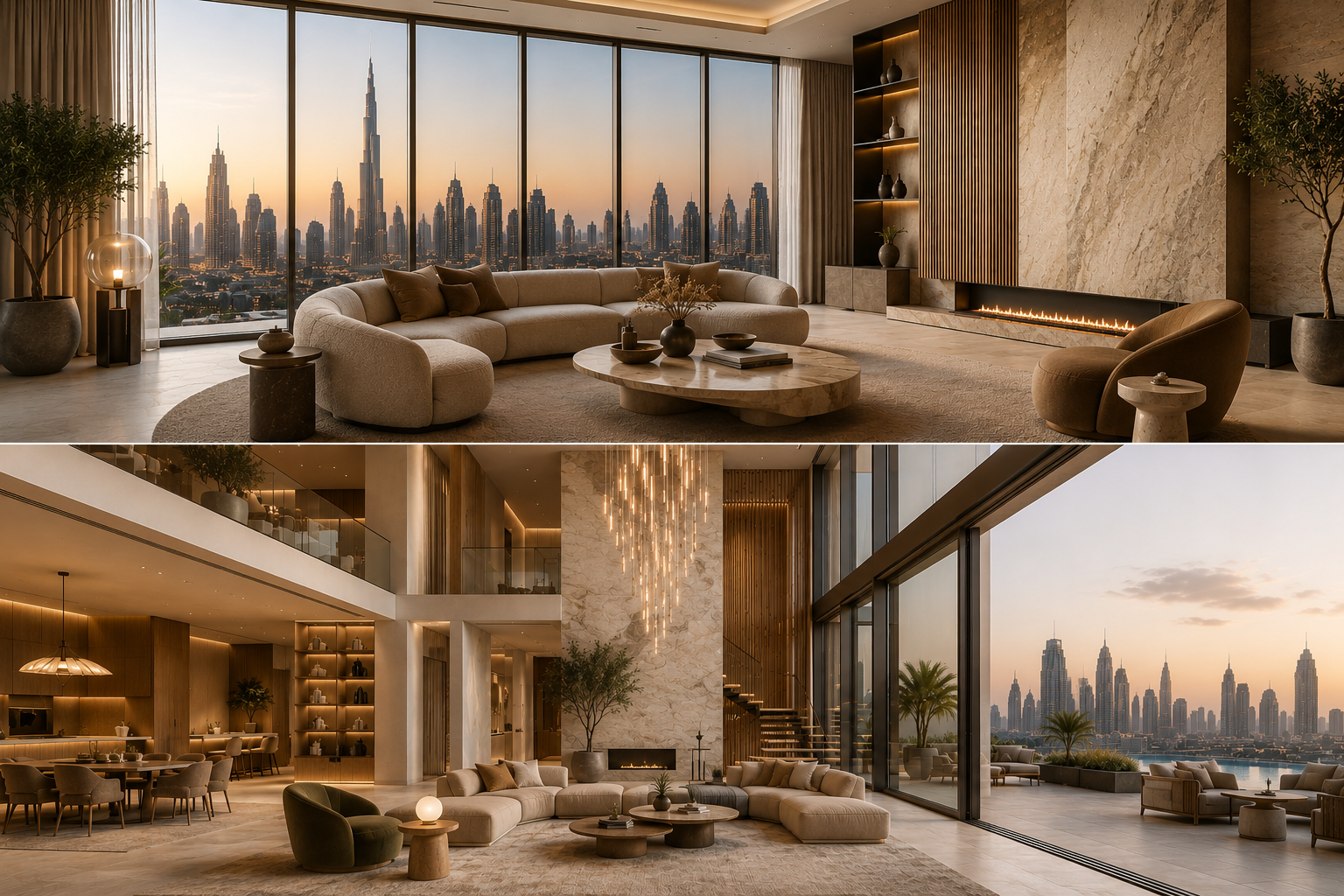
Interior design trends are basically the evolving styles, materials and spatial ideas that shape how homes, offices and hospitality spaces feel and function at any given time. They pick up on shifts in how people want to live, what technology makes possible and what a culture decides matters right now, across both residential and commercial projects. Dubai moves faster than most. The UAE market pulls from Emirati heritage, a hundred international influences and a genuine obsession with doing things at scale, which pushes designers and contractors to keep raising the bar whether they want to or not. What clients are commissioning in 2026 isn't just about aesthetics. It's about spaces that actively support wellbeing, reflect cultural identity and hold up over time, not just for the magazine shoot. This article looks at the key UAE interior design trends 2026 through the lens of what clients in Dubai are actually asking for, from biophilic design in private villas to minimalist luxury in corporate offices, with the aim of giving homeowners, developers and hospitality operators something practically useful before they start their next project.
Why Dubai Leads the Way in Design Evolution
Dubai doesn’t really follow global design movements. It takes them, twists them and puts them back out in a form that’s distinctly its own. A population drawn from over 200 nationalities, a government with serious infrastructure ambitions and a pipeline of residential towers, boutique hotels, restaurants and corporate HQs that never seems to slow down- the conditions for genuinely original design are just there, built into the city’s structure.
At Zyra Living Design, we work across Dubai and Sharjah on residential, commercial and hospitality projects. The conversations we’ve been having with clients through 2025 and into early 2026 tell a pretty consistent story: people want spaces that feel warm and purposeful and somehow connected to where they actually are. The trends below reflect that.
The Top Interior Design Trends Reshaping Dubai Spaces in 2026
Six trends are showing up repeatedly in client briefs this year, across villas, offices, retail and hospitality. Here’s the quick version before we get into each one.
2026 Interior Design Trends at a Glance
| # | Trend | Most Requested By | Primary Design Element |
| 1 | Biophilic Design | Villa owners, hospitality, offices | Living walls, natural stone, indoor greenery |
| 2 | Warm Neutral Interiors | Residential, luxury apartments | S and, taupe, terracotta, warm ivory palettes |
| 3 | Minimalist Luxury | Corporate, retail, high-end villas | Clean lines, quality materials, bespoke joinery |
| 4 | Emirati Cultural Integration | UAE nationals, boutique hospitality | Mashrabiya screens, Arabic geometry, majlis spaces |
| 5 | Smart and Climate-Responsive Design | Commercial developers, luxury residential | Integrated HVAC aesthetics, smart lighting, automation |
| 6 | Curved Forms and Organic Shapes | Residential, boutique F&B, hotels | Arched openings, rounded furniture, soft edges |
01- Biophilic Design– Bringing nature indoors through living walls, natural stone, water features, timber and limestone. Not optional anymore in premium projects. It’s what clients expect.
02- Warm Neutral Interiors– The cool grey era is over, at least here. S and, warm ivory, taupe, terracotta- shades that actually feel like the UAE l andscape and happen to look expensive without trying too hard.
03- Minimalist Luxury– Quality over quantity, taken seriously. Bespoke joinery, concealed storage, furniture selections that are genuinely edited. Applies across sectors now, not just the ultra-high-end.
04- Emirati Cultural Elements– Mashrabiya screens, Arabic geometric patterns, modern majlis spaces- all coming back into briefs, but done thoughtfully with a contemporary eye, not as decoration layered on top.
Biophilic Design in Dubai: Connecting Interiors to the Natural World
Biophilic design Dubai has moved well past the occasional potted plant in the corner. In 2026, clients are asking for fully integrated natural systems: living green walls with built-in irrigation, floor-to-ceiling windows that actually frame something worth looking at, travertine and limestone surfaces, indoor water features that also happen to absorb some noise.
The UAE climate makes this more than a stylistic preference. When summers regularly hit 40°C outside, having greenery, natural light and organic materials indoors creates something genuinely different to the environment outside. For Interior Design Dubai projects, biophilic elements are being requested for wellbeing reasons now, not just because they photograph well- better air quality, lower stress levels, measurably improved productivity in office environments.
Practically speaking, this requires MEP coordination from the start, not as an afterthought. Irrigation systems for living walls, drainage for water features, natural light routing- all of that has to be resolved in the design and engineering phase before construction begins, or you end up compromising on the thing clients specifically asked for.
Warm Neutral Interiors Dubai: The End of Cold Grey
The shift away from cool grey interiors has been building for a couple of years, but in 2026 it feels fairly definitive. Warm neutral interiors Dubai are dominating both residential and commercial palettes. Sand warm ivory, aged taupe, camel, terracotta- they’re showing up in upholstery, wall finishes, joinery, flooring, all of it.
They work in this context in a way that grey honestly didn’t. They echo the desert l andscape, sit comfortably alongside natural stone and timber finishes and create spaces that feel relaxed and refined at the same time- which is harder to achieve than it sounds. For Residential Interior Design clients renovating villas on Palm Jumeirah or in Dubai Hills, the warm neutral palette gives them a backdrop that actually ages well and doesn’t lock them into a look that’ll feel dated in three years.
In commercial spaces it’s the same story- lobbies, collaborative areas, hotel rooms- paired typically with brushed brass fixtures, textured linen panels, custom joinery in walnut or oak. The combination adds material richness without tipping into something heavy or dark.
Minimalist Luxury UAE: When Less Genuinely Means More
Minimalist luxury UAE is probably the most misused phrase in current design conversations, so it’s worth being clear about what it actually means in practice. It doesn’t mean blank walls or rooms with nothing in them. It means disciplined choices: one excellent material instead of three mediocre ones, bespoke joinery that hides the clutter rather than forcing you to confront it, lighting that builds atmosphere without fighting the architecture for attention.
This comes up a lot in Commercial Interior Designing projects across Business Bay, DIFC and Dubai Internet City, where companies want offices that read as sophisticated without looking like they’re trying too hard. Fluted wall panels, concealed ceiling lighting, frameless glass partitions, two or three complementary materials held to consistently- that’s what makes it work.
For residential clients the translation is: a master bedroom where every piece of furniture belongs there, a kitchen where h andles disappear into the design, a living room where one well-chosen piece of art does the job that ten decorative objects never quite manage.
What clients in Dubai are specifying in 2026 under this banner specifically: h andle-free joinery with push-to-open mechanisms, concealed LED strips behind ceiling coves, single-material feature walls in marble or fluted wood, bouclé or textured linen for upholstered seating, brushed brass or matte black hardware used as the only metallic accent throughout. That last point matters- one metal, not three.
Emirati Cultural Elements: Heritage Meets Contemporary Design
This is probably the most interesting shift happening in briefs right now. Rather than treating Arabic cultural elements as things to add near the end of a project, clients are building them into the spatial concept from the start.
Mashrabiya-inspired screens are being used as functional architectural elements- providing privacy, shade and actual solar gain reduction on facades- not just stuck on a feature wall for texture. Arabic geometric patterns are showing up in floor inlays, ceiling plasterwork and custom joinery. Modern majlis areas are being incorporated into villa floor plans as genuine primary family spaces rather than formal rooms that sit empty most of the year.
For many UAE nationals redesigning family villas, the master bedroom interior design ideas they bring to an initial briefing now reference traditional craft techniques specifically: h and-carved gypsum details, sadu-inspired textile choices, Arabic calligraphy placed as a considered installation rather than a last-minute addition. It’s a cultural reclamation that feels considered rather than performative and it makes Dubai interiors look like they couldn’t be anywhere else- which isn’t something you can say about everything being designed right now.
Smart and Climate-Responsive Interiors: Designing for the UAE Environment
UAE summers make climate control a design issue, not just a mechanical one. In 2026, the best Dubai interiors are treating cooling and ventilation systems as something to be designed around rather than hidden- though ideally both.
VRF (Variable Refrigerant Flow) HVAC systems are being specified in luxury residential and commercial projects because they allow zone-by-zone temperature control with minimal ceiling penetration, which preserves the clean ceiling lines that minimalist luxury requires. Smart home automation covers lighting, temperature, blinds and security through a single interface and the best implementations genuinely disappear into the finished space.
In design terms this means specifying HVAC diffusers that align with ceiling grid patterns, integrating motorised blinds within window frames rather than hanging them as additions, routing conduits through joinery where they’d otherwise break up a feature wall. None of this happens unless MEP and interior design teams are working together from the concept stage, not meeting each other for the first time at the shop drawing phase.
How These Trends Apply Across Different Sectors
These trends don’t l and the same way across every project type. The table below maps how each one shows up in residential, commercial and hospitality contexts, which might help clients and project teams decide where to focus.
Trend Application by Sector
| Trend | Residential Villas | Commercial Offices | Hospitality (Hotels / F&B) |
| Biophilic Design | Living walls, courtyard gardens | Green walls in lobbies, planter dividers | Indoor gardens, natural stone features |
| Warm Neutral Palettes | Core palette for all rooms | Reception and collaboration areas | Guest rooms, restaurant dining |
| Minimalist Luxury | Kitchens, master suites | Executive offices, boardrooms | Lobby, bar, premium dining areas |
| Emirati Cultural Elements | Majlis, master suite, foyer | Occasional feature element only | Lobby, cultural dining concepts |
| Smart Climate Design | Full home automation | Energy management, occupancy sensors | HVAC zoning, smart room controls |
| Curved Organic Forms | Living rooms, master bedrooms | Limited application | Bar counters, lounge seating areas |
What Residential Clients Are Requesting in 2026
For villa and apartment owners across Dubai, the 2026 brief is consistently about warm neutral interiors combined with a genuine shift in how budgets are being allocated. Fewer rooms, higher st andard. That’s the pattern.
The master bedroom is still the room that carries the most emotional weight in any renovation brief. Clients ask for custom upholstered headboards in textured linen or bouclé, integrated wardrobe systems with interior lighting, ceiling treatments that add something architecturally interesting without overwhelming a room that’s supposed to help you sleep. All of this pulls in custom joinery, bespoke furniture, MEP coordination for concealed lighting. It’s the room where everything has to connect.
Outdoor spaces are getting more serious attention than they used to. Landscaped terraces with shade structures, pool surrounds in natural stone coping, outdoor kitchens with weather-resistant joinery- these are being treated as proper extensions of the interior rather than nice-to-haves that get value-engineered out during the tender stage.
Current Design Trends Reshaping Commercial Spaces Across the UAE
Commercial clients in 2026 want interiors that do two things well: communicate clearly as a br and environment and actually support how people work. The all-open-plan office is largely gone from the briefs we’re seeing. What’s replaced it is a more layered approach- spaces that give people options during the day.
For businesses fitting out in Business Bay, Downtown Dubai, or Silicon Oasis, the brief typically includes acoustic focus zones, collaborative areas built around comfortable seating rather than formal meeting tables and reception areas that tell you something about the company through materials and lighting rather than printed graphics on the wall.
Restaurant and retail clients want spaces where the concept is obvious within seconds of walking in. Material storytelling- holding a consistent palette of stone, metal and timber across surfaces, fixtures and furniture- is replacing the layered decoration approach that tends to look cluttered and date faster than anyone planning the project anticipated.
Conclusion: Designing for Dubai in 2026
What connects the interior design trends shaping Dubai in 2026 is intention. The biophilic wall that actually improves air quality. The warm neutral palette that creates real calm rather than trying to. The minimalist luxury finish that’s still going to look right in ten years. The modern mashrabiya that’s doing something architecturally, not just sitting there. These aren’t trends being followed for the sake of it- they’re responses to what clients in this city are genuinely asking for when they take the time to think about what they want.
For homeowners, developers and hospitality operators, getting across these shifts early means commissioning spaces that hold up rather than date. The projects that l and well consistently are the ones where design, engineering, joinery and fit-out are all in the room together from the start.
If you’re planning a residential, commercial, or hospitality interior project in Dubai in 2026, our team at Zyra Living Design is ready to help you translate these trends into a space that reflects your vision. Contact us today to arrange a consultation and discuss your project brief.
Frequently Asked Questions
The leading UAE interior design trends 2026 are biophilic design with natural materials and living walls, warm neutral interiors replacing the cool grey palettes that dominated the previous few years, minimalist luxury built around bespoke joinery and contemporary reinterpretations of Emirati cultural elements- mashrabiya screens, majlis-inspired spaces, Arabic geometric patterns. Smart climate-responsive design and organic curved forms are also showing up consistently across residential and commercial projects.
Biophilic design integrates natural elements- living plants, natural stone, water features, organic materials- into interior spaces to support human wellbeing. In Dubai specifically, where the built environment is highly urban and the outdoor climate is extreme for a significant part of the year, biophilic interiors create a psychological counterbalance to all of that. Clients across villas, offices and hospitality venues are asking for it as a wellbeing priority, not just an aesthetic one.
In 2026, Emirati cultural motifs are being built into spatial concepts with genuine architectural purpose rather than applied as surface decoration at the end. Mashrabiya-inspired screens are used for functional shading and privacy. Arabic geometric patterns appear in floor inlays and bespoke ceiling plasterwork. Modern majlis spaces are designed as actual primary gathering rooms rather than formal areas that rarely get used. The result feels culturally rooted while remaining thoroughly contemporary in execution.
Minimalist luxury UAE is a design philosophy that prioritises quality over quantity- fewer materials, more considered, clutter addressed through bespoke joinery and concealed storage rather than just by removing things. Unlike a stark minimalism that can feel cold, it brings warmth through textured fabrics, natural stone and timber, creating spaces that feel refined without being uninviting.
Yes, most of the key 2026 trends apply across residential villas, corporate offices, retail fit-outs and hospitality venues- they just manifest differently in each. Biophilic design and warm neutral palettes come up across all project types. Emirati cultural elements are most prominent in residential and boutique hospitality briefs. Smart climate-responsive design matters more in commercial projects where energy efficiency and occupant comfort are operational priorities that somebody has to account for.